Tiger Face Digital Embroidery Design
A Designer’s First Impression: Fierce, Detailed, and Ready for Boutique Apparel
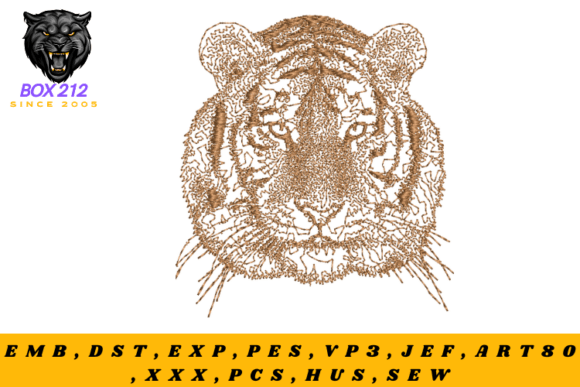
As an embroidery designer who’s developed collections for small clothing brands and Etsy sellers for over a decade, I opened the Tiger Face Digital Embroidery Design expecting boldness—and it delivered. This isn’t a cartoonish or simplified animal motif. It’s a tightly composed, expressive interpretation of wild intensity: focused eyes, textured fur contours, and layered shading that reads as premium even at 3.5”–4.5” chest placement. The visual personality leans bold, classic, and confident—not playful or whimsical. That makes it ideal for boutique apparel where customers seek authenticity and craftsmanship, not just trend-chasing.
How It Performs Across Real Apparel Projects
I tested the Tiger Face Digital Embroidery Design across several garment types common in small-batch production—and its versatility surprised me.
- Sweatshirt embroidery: On midweight cotton-blend sweatshirts, the design held crisp definition without puckering. Its balanced stitch density allows clean coverage on fleece without excessive bulk.
- Hoodie design: Placed centered on the chest (3.75” width), it anchors the look without overwhelming. For oversized hoodies, I recommend scaling up to 4.25”–4.5” to maintain presence against volume.
- Sleeve accents & back designs: At 2.8” wide, it works beautifully on upper sleeves—especially on neutral or heathered tones. As a back design (scaled to 6”), it becomes a statement piece, but only if your stabilizer and hooping technique support larger coverage.
- T-shirt embroidery: Best on structured, medium-weight tees—not ultra-thin jersey. Use lightweight cutaway stabilizer and reduce top tension slightly to prevent thread breakage in dense fur zones.
- Denim jackets & tote bags: The design’s strong outlines and intentional negative space translate well on rigid surfaces. On denim, it reads with quiet authority; on canvas totes, it adds artisanal weight without looking dated.
- Seasonal & lifestyle use: Paired with oatmeal, charcoal, or deep moss green apparel, the Tiger Face Digital Embroidery Design elevates cozy, slow-living aesthetics. It photographs exceptionally well in natural light—ideal for printable mockups and Instagram product shots.
Where to Place It—And Where to Pause
This isn’t a one-size-fits-all motif. Its strength lies in intentionality.
Use with confidence on:
- Flat, stable areas like chest, upper back, or center-front hoodie pockets
- Neutral or dark garments where thread contrast enhances depth (e.g., charcoal sweatshirts with burnt orange or charcoal-gray thread)
- Boutique merchandise where visual consistency matters—think matching hoodies, totes, and beanies in a curated launch
Exercise caution with:
- Stretchy fabric (like performance knits)—test extensively; consider reducing density or adding stretch stabilizer
- Ribbed fabric (e.g., ribbed cuffs or collars)—the design’s fine details may distort across vertical texture lines
- Curved surfaces (like curved hems or contoured pockets)—hoop carefully and avoid placing near seams that shift during wear
- Small chest placement under 2.5”—detail loss is noticeable, especially in the eye and whisker regions
Impact Beyond the Stitch: Brand, Trust, and Recognition
For Etsy sellers and handmade product creators, the Tiger Face Digital Embroidery Design does more than decorate—it communicates. Its refined execution signals professional standards. Customers notice clean edges, thoughtful spacing, and balanced fill work. That builds buyer trust faster than generic motifs. When used consistently across a collection—say, tiger-embroidered hoodies, matching drawstring bags, and embroidered tags—it strengthens brand identity without relying on logos. It also supports visual consistency in social media graphics and printable mockups, helping small shop products stand out in crowded feeds.
Practical Designer Notes Before You Stitch
Before committing to production, here’s what I always do—and recommend you do too:
- Test on scrap fabric that matches your final garment’s weight, texture, and stretch—even if it’s from the same bolt.
- Confirm stabilizer choice: Medium-weight cutaway works best for most sweatshirt and hoodie applications; tear-away may shift on dense fills.
- Review thread color contrast—this design relies on tonal layering. Avoid low-contrast combos (e.g., light gray on heather gray) unless intentionally muted.
- Check hoop size requirements in the Creative Fabrica embroidery file details. Don’t assume compatibility—verify before hooping.
- Inspect stitch density visually in your embroidery software. Look for tight clusters in the muzzle and eye areas—if they appear overly congested, consider slight manual thinning or adjusting underlay.
- Test on similar garment fabric—a test run on a finished hoodie (not just scrap) reveals how it behaves after washing and wear.
- Compare placement options using printed templates or digital overlays—small shifts in vertical alignment dramatically affect balance.
- Review Creative Fabrica product details and licensing before selling finished apparel. Confirm commercial use rights and any restrictions tied to the Wild Animals category or Embroidery type.
Final Thought: A Strong Anchor for Intentional Collections
The Tiger Face Digital Embroidery Design isn’t filler—it’s a focal point. It carries weight, both visually and emotionally. For small shops building custom apparel with meaning, it fits naturally into seasonal drops, signature pieces, or limited-edition bundles. Used thoughtfully, it elevates sweatshirt embroidery from casual to collectible, transforms a basic hoodie into a wearable story, and gives handmade product creators a distinct voice in a saturated market. If your brand values craftsmanship, clarity, and quiet confidence, this Creative Fabrica embroidery file earns its place in your digital library—and on your next batch of boutique apparel.