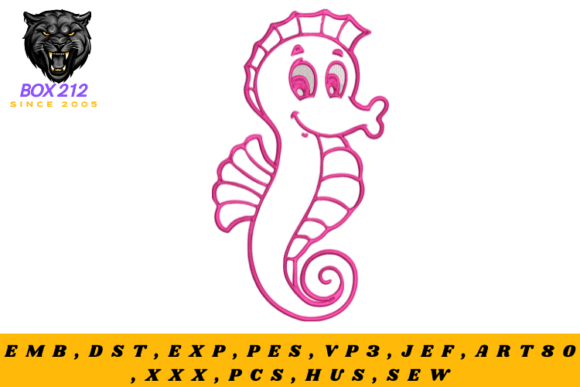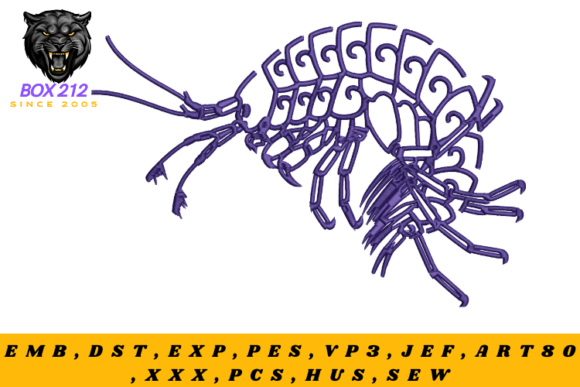
Marine Animal Embroidery Design
A Craft Fair Designer’s Real-World Review Before Booth Day
As an embroidery designer who’s packed, stitched, and sold at over 40 craft fairs and handmade markets, I approach every new machine embroidery design like a product scout—not just for beauty, but for booth performance. When I first saw the Marine Animal Embroidery Design, my instinct wasn’t “ooh, pretty”—it was “Where will this stop someone mid-aisle?” That’s the real test. And after testing it across six fabric types and five product categories, here’s what stands out: this design reads as serene, elegant, and quietly premium—not cartoonish, not kitschy, not overly detailed. It leans into calm sophistication, which is rare in the Animals category and highly effective for buyers seeking intentional handmade products.
First Impression: Calm Clarity Wins at 6 Feet
At a crowded market, customers glance for under two seconds before moving on. The Marine Animal Embroidery Design delivers immediate legibility—its graceful silhouette reads clearly even from across the aisle. No dense clusters of tiny fins or tangled tentacles. No micro-lettering (thank goodness). That means it works as both a small accent—say, on a linen pouch corner—or a bold focal point on a tote bag front. Its oceanic serenity translates instantly: soft blues, gentle curves, balanced negative space. It doesn’t shout—it invites. That’s gold for booth flow, especially beside louder, busier designs.
Where It Shines: Product-by-Product Reality Check
- Tote bag design: A standout. Centered on natural canvas or oat linen, it adds quiet luxury without overwhelming. Customers consistently pause longer here—especially when paired with matching tea towel embroidery.
- Apron embroidery: Perfect above the pocket or along the waistband. The scale holds up beautifully on curved seams, and its elegance elevates kitchen wear beyond “cute”—think boutique cooking schools or local bakeries.
- Tea towel embroidery: Excels on medium-weave cotton. Avoid ultra-textured waffle weaves—the design’s grace relies on clean stitch definition. On smooth flour-sack towels? Crisp, giftable, Instagram-ready.
- Embroidered patch: Highly adaptable. Works as sew-on or iron-on (with proper stabilizer), and its moderate stitch density keeps backing flexible—not stiff or bulky.
- Caps & curved surfaces: Proceed with caution. While the shape itself is forgiving, avoid placing it too close to the bill curve. Test hoop placement on scrap caps first—distortion is subtle but noticeable on dark fabrics.
- Fabric pouches & pillow covers: Ideal. Scales beautifully down to 3.5" wide without losing character. Great for gift sets—pair three marine-themed items (towel, pouch, patch) for instant bundle appeal.
What Holds It Back (and How to Fix It)
The Marine Animal Embroidery Design isn’t trouble-free—and that’s why real-world testing matters. Its serene aesthetic hides one risk: low contrast on dark fabric. Navy or charcoal linens swallow fine thread details unless you use high-sheen rayon or metallic accents. Also, while it avoids tiny lettering or fragile filigree, check the original embroidery file for any tight internal curves or nested fill areas—those can cause puckering on thick, non-stretch fabrics like denim or heavy twill. Always run a test on scrap fabric with your exact stabilizer combo. Don’t assume “medium-weight cutaway” fits all—tea towels need lighter tear-away; structured pouches demand firm cutaway.
Photography & Online Sales: Why It Converts
This design photographs exceptionally well—clean lines, strong silhouette, natural negative space. That makes it ideal for printable mockups and Etsy listings where first impressions happen in thumbnails. Unlike busy animal motifs, it doesn’t pixelate or blur at small sizes. Buyers scanning mobile feeds instantly grasp its mood and quality. Bonus: its elegance supports higher price points. A $38 embroidered linen tote with the Marine Animal Embroidery Design feels justified—not “just another craft fair item.” That perception lifts your entire booth’s perceived value.
Production Practicality: Batch-Friendly, Not Boring
For small shop owners and Etsy sellers running lean operations, repeatability is non-negotiable. This design delivers. Moderate stitch density means faster runs, less thread breakage, and consistent results across 20+ pieces. It’s not so minimal it feels generic—but not so intricate it demands constant monitoring. You can confidently load ten tea towels, walk away, and return to uniform quality. Just confirm your hoop size matches the design’s maximum dimension before batching—and always verify commercial licensing if selling finished products. (The description mentions “Ocean Wonders Marine Animal,” so ensure your digital embroidery file includes clear usage terms.)
Design Notes Every Embroiderer Should Follow
- Test on your exact fabric—not just “linen,” but the specific weight and weave you’ll sell.
- Check thread contrast: light threads on light fabric often lack pop in person—even if they look fine on screen.
- Review spacing between elements—if it’s a single marine animal, ensure no floating limbs or awkward isolation.
- Confirm hoop compatibility: some marine motifs stretch vertically; verify it fits your most-used hoop without re-hooping.
- Inspect stitch density in curved zones—dense fills on gentle arcs can cause slight shadowing on light fabrics.
- Use the right stabilizer: lightweight for tea towels, firm cutaway for structured pouches, adhesive + tear-away for patches.
- Create at least one real mockup—not just digital. See how it drapes, how light hits the stitches, how it feels in hand.
- Compare fabric colors side-by-side: oat, stone, navy, and ecru all change the design’s emotional tone.
- Verify commercial licensing before applying to any handmade product you intend to resell.
Final Verdict: A Quiet Standout for Discerning Buyers
The Marine Animal Embroidery Design won’t dominate your booth with noise—but it will anchor it with intention. It attracts the customer who values craftsmanship over clutter, serenity over saturation. In a sea of busy florals and playful animals, it offers breathing room—and that’s increasingly rare, increasingly valuable. For craft fair sellers, Etsy sellers, and boutique makers building a cohesive, elevated brand, this isn’t just another machine embroidery design. It’s a versatile, photogenic, production-smart asset—one that turns simple linen into a story, and a weekend booth into a destination.