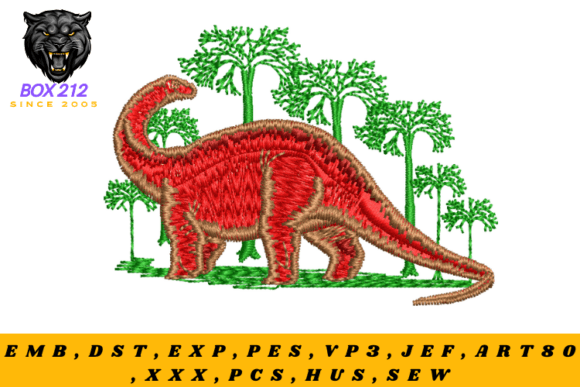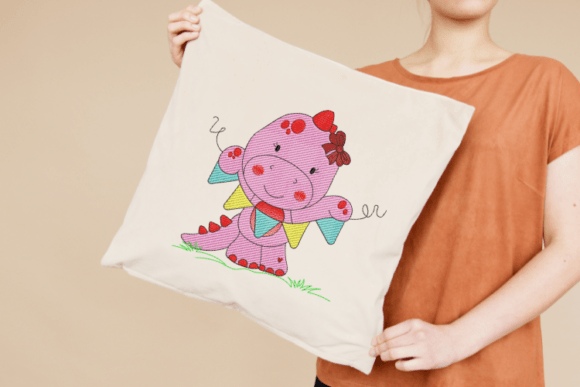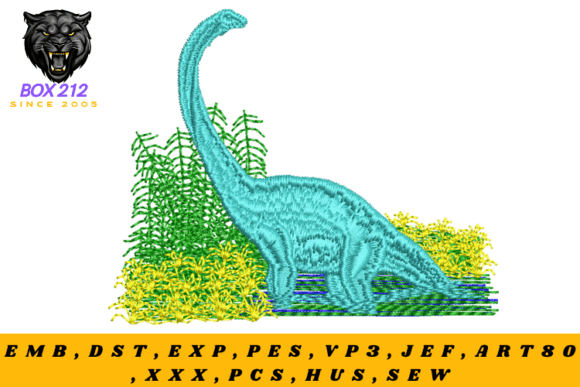
Dinosaur Digital Embroidery Design
A Practical Review for Small Business Merch & Branded Patches
As an embroidery designer who’s digitized and stitched thousands of logos for cafés, boutiques, bakeries, pet brands, and handmade studios, I approach every digital embroidery file with two questions: Will it stitch cleanly at scale? and Does it strengthen brand identity—not distract from it? The Dinosaur Digital Embroidery Design delivers a refreshingly balanced answer. From the title alone—“Step back in time and add a prehistoric twist”—I immediately sense its tone: playful but not childish, detailed but not fussy, nostalgic without feeling dated. That’s rare. For small business owners choosing custom apparel or embroidered patches, that balance is non-negotiable.
First Impression: Friendly, Bold, and Professionally Playful
The description highlights a “detailed and playful dinosaur,” and that duality is its strongest asset. It doesn’t lean into cartoonish exaggeration nor sterile realism—it occupies that sweet spot where charm meets craftsmanship. That makes it unusually versatile: a florist can use it on aprons as a lighthearted nod to “growing things,” a kids’ boutique can feature it on tote bags without sacrificing sophistication, and a local bakery might embroider it subtly on sleeve cuffs of staff uniforms to spark conversation without overwhelming their brand voice. Unlike overly ornate or minimalist designs, the Dinosaur Digital Embroidery Design reads clearly at 2.5 inches—and holds visual weight even when scaled up to 4 inches on a tote bag front.
Real-World Performance Across Business Applications
In commercial embroidery, context is everything—and this design adapts thoughtfully:
- Embroidered patches: Works exceptionally well as a sew-on or iron-on patch for staff jackets, product packaging, or customer gift tags. Its clean outlines and moderate stitch density minimize fraying during cutting and washing.
- Apron embroidery & cap embroidery: Placed on chest or left sleeve, it adds personality without compromising professionalism—ideal for creative studios or family-run shops wanting warmth and approachability.
- Tote bag design & custom apparel: Scales confidently across cotton canvas, canvas blends, and twill. Its shape allows for natural flow around curves (like bag gussets or shoulder seams), reducing puckering risk when hooped correctly.
- Product labels & boutique merchandise: When used as a small accent—say, 1.25" on a handmade soap wrap or ceramic tag—it becomes a tactile signature, reinforcing the handmade product feel without competing with typography or photography.
- Event merch & Etsy branding: Stands out in crowded markets because it’s memorable but not gimmicky—customers remember the friendly silhouette, not just the logo.
Where to Use It Thoughtfully
No design is universally bulletproof—and smart small business owners know where to pause. With the Dinosaur Digital Embroidery Design, exercise care in these scenarios:
- Cap fronts under 2 inches: Fine detail may soften; test stitch at 1.75" first to confirm legibility of eyes, mouth, and texture lines.
- Highly textured fabric (e.g., heavy linen or burlap): Requires extra stabilizer support—especially under dense areas—to prevent thread pull-through.
- Dark uniforms or black tote bags: Thread color contrast matters. Avoid light pastels unless paired with white underlay; opt for high-contrast combos like kelly green + charcoal or burnt orange + navy.
- Frequent-wash items (e.g., staff aprons): Confirm stitch density isn’t so high that it compromises fabric flexibility or durability over time.
- Curved surfaces (like baseball caps or curved pockets): Always hoop with appropriate cap frame and use tear-away + cut-away stabilizer blend.
Impact on Brand Identity & Customer Trust
For small businesses, every embroidered detail shapes perception. A poorly digitized or mismatched design signals haste—not care. The Dinosaur Digital Embroidery Design does the opposite: its clarity, proportion, and intentional playfulness signal intentionality. When customers see it on a café’s staff apron or a florist’s reusable tote, they subconsciously register consistency, craft, and personality. That builds recognition faster than generic fonts or clip art. It also elevates perceived product value—handmade goods with thoughtful embroidery feel more curated, more worth sharing, more worth returning for. And crucially, it supports visual consistency across touchpoints: same design on a patch, cap, and printable mockup creates cohesion no stock icon can match.
Practical Designer Notes Before You Stitch
Before sending the Dinosaur Digital Embroidery Design to production—or presenting it to a client—follow these field-tested steps:
- Test it in black and white first to assess contrast and negative space balance.
- Check how it renders at your smallest intended patch size (e.g., 1.5")—does the tail or eye still read clearly?
- Review thread color recommendations against your brand palette; don’t assume default colors suit your fabric.
- Inspect spacing between elements—tight loops or overlapping shapes can cause nesting issues on low-end machines.
- Confirm hoop size compatibility with your embroidery machine and common garment placements (e.g., left chest = 4"x4" standard).
- Stitch a sample on your target fabric—especially if using textured, stretchy, or dark materials.
- Use appropriate stabilizer: medium-weight cut-away for knits, tear-away + fusible for stable wovens.
- Create a printable mockup for client approval—show it on actual product photos, not just white backgrounds.
- Compare it beside your other design assets (logo, typography, icons) to ensure visual harmony.
- Verify commercial licensing—this is essential for small business merch, Etsy sellers, and any resale application.
Remember: the Dinosaur Digital Embroidery Design isn’t just a machine embroidery design—it’s a brand amplifier. Used intentionally, it turns everyday items into conversation starters, reinforces handmade authenticity, and quietly tells customers, “We pay attention to the details that matter.” That’s not decoration. That’s strategy—stitched.