Cute Kitty Valentine Embroidery
First Impression: Sweet, Playful, and Instantly Recognizable
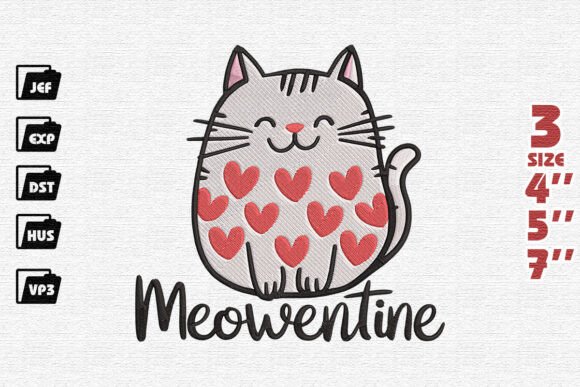
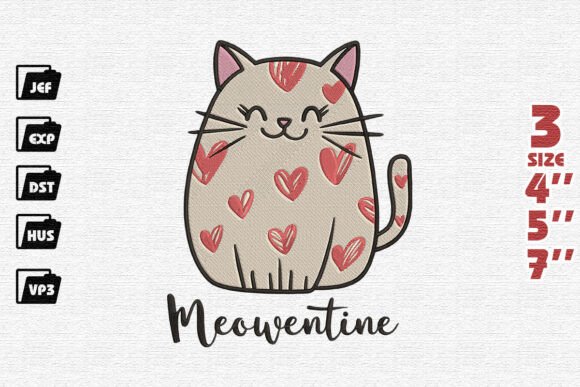
As an embroidery designer who’s prepped over 200 craft fair booths—and shipped thousands of handmade products—I’ll say it straight: Cute Kitty Valentine Embroidery lands with cheerful clarity. It’s not elegant or minimalist. It’s not rustic or vintage. It’s playfully festive, warmly modern, and unapologetically cat-cute—exactly what draws eyes at a crowded market table. The “Meowentine” text adds wit without sacrificing sweetness, and the hearts + kitty combo signals Valentine S Day instantly—even from six feet away. That’s gold for craft fair product visibility.
Where This Design Shines on Handmade Goods
Cute Kitty Valentine Embroidery thrives where personality meets utility. On a natural canvas tote bag? Perfect—it reads bold and joyful without overwhelming. On a cotton apron? Ideal for the front pocket or chest panel, adding charm to functional kitchen wear. For tea towel embroidery, position it centered near the top hem: the hearts frame the kitty beautifully against linen or waffle weave, and the playful text invites a smile while drying dishes.
It also works exceptionally well as an embroidered patch—clean lines, balanced negative space, and moderate detail mean it stitches crisply even at 3"–4" width. As a small-shop product, that versatility is critical: one digital embroidery file becomes patches, pillow covers, pouches, and cap fronts—all with consistent brand warmth.
For Etsy sellers and boutique makers, this design performs strongly in printable mockups. Its high-contrast elements (kitty silhouette, heart shapes, clear letterforms) translate cleanly to lifestyle photos—no fuzzy edges or lost details when scaled for thumbnails or social ads. And yes, it photographs beautifully on dark fabric if you choose high-contrast thread colors (think blush pink thread on navy denim or white on charcoal twill).
Production Reality Check: What Works—and What Needs Care
This isn’t a “set-and-forget” machine embroidery design. While charming, Cute Kitty Valentine Embroidery has real production considerations:
- Small lettering: “Meowentine” must be sized carefully—below 1.5" wide, the curves risk distortion on textured towels or thick fabrics. Always test stitch on scrap first.
- Dense stitch areas: The kitty’s face and clustered hearts may compress on low-loft stabilizer. Use medium-weight cutaway + tear-away combo for structured items like caps or pouches.
- Curved surfaces: Caps and curved market bags demand precise digitizing alignment. If your embroidery file doesn’t include underlay or pull compensation, expect subtle puckering—especially around the kitty’s ears or heart outlines.
- Fabric texture matters: Avoid dense terry cloth or heavy bouclé for this design. Stick to smooth cotton, linen blends, or midweight twill. Tea towel embroidery benefits most from tightly woven, pre-washed fabric.
Booth & Buyer Impact: Why It Moves Product
In person, Cute Kitty Valentine Embroidery delivers three key advantages: immediate emotional connection, clear category signaling, and handmade authenticity. Cat lovers stop. Couples browsing for gifts pause. Teens buying for friends giggle at “Meowentine.” That micro-moment of engagement is everything at a craft fair.
Visually, it strengthens booth display strength—especially when repeated across coordinated items: a trio of matching pouches, a set of embroidered tea towels, or a wall-hanging sampler of stitched samples. That repetition builds perceived value and makes your small shop product feel intentional, not random.
It also supports brand consistency. Whether you’re an Etsy seller known for whimsical animal themes or a boutique maker curating soft, seasonal collections, Cute Kitty Valentine Embroidery fits seamlessly—no rebranding required. It feels premium because it’s designed with balance: enough detail to read as handmade, but clean enough to avoid visual fatigue.
Designer Notes You Can’t Skip Before Stitching
Before cutting fabric or loading hoops, run these checks:
- Test the design on scrap fabric—same type and weight you’ll use for final products.
- Check thread contrast on both light and dark backgrounds. Don’t assume white thread reads well on cream linen; sample it.
- Review spacing between hearts and kitty outline—tight gaps can merge during stitching on unstable fabrics.
- Confirm hoop size compatibility. If your embroidery file requires a 5x7 hoop minimum, don’t force it onto a 4x4 cap front.
- Inspect stitch density—especially in the kitty’s tail or inner heart curves. Over-stitched zones trap moisture and stiffen fabric.
- Use the right stabilizer for your base: cutaway for stretchy knits, tear-away for stable wovens, fusible for lightweight linens.
- Create at least one real mockup—not just a digital preview. See how the finished product drapes, folds, and catches light.
- Compare fabric colors side-by-side before bulk cutting. Dye lots shift—what looks perfect on screen may mute the hearts’ pop in person.
- Confirm commercial licensing before selling finished products. Not all digital embroidery files permit resale of physical goods—verify before your craft fair weekend.
Final Thought: A Reliable, Repeatable Valentine S Day Seller
Cute Kitty Valentine Embroidery isn’t flashy—but it’s dependable. It’s the kind of embroidery file that sells steadily from January through February, then quietly returns next year with zero buyer fatigue. It works across categories, scales well for batch production, and feels authentically handmade—not mass-produced or generic. For embroidery business owners building a catalog of small shop products, it’s a smart anchor design: joyful, practical, and unmistakably loveable. Just remember: respect the details, test thoroughly, and let that kitty do the talking.